
Remote vs. Hybrid Work: Similar, Yet Different

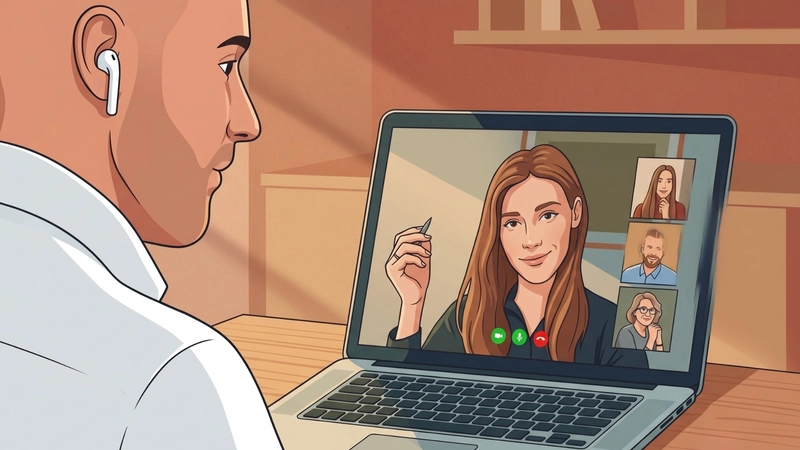
The pandemic forced companies to adopt new ways of working. Many organizations faced a choice: embrace a hybrid model and send some employees to home office, or give up the office entirely and switch to a fully remote setup? Both paths can deliver real benefits, but they need to be planned thoroughly, with their potential challenges in mind.
Until March 2020, remote or hybrid work was a rather occasional practice at most companies, treated as a non-salary perk for employees. We were used to office spaces and organized our professional lives around them. The coronavirus pandemic turned remote work from an occasional luxury into the prevailing standard.
Out of necessity, the work model transformed, and a growing body of research confirms these changes will stay with us even after the pandemic. As early as April 2020, Salesforce Research and Deloitte ran a study, “The World Remade by COVID-19: Scenarios for Resilient Leaders, 3–5 Years.” 69% of respondents believed the pandemic had permanently changed the nature of work. A later October survey by the Polish recruitment platform Pracuj.pl found that 87% of people would like to keep working at least partly remotely even after the pandemic is contained, and 71% of them prefer a hybrid model.
So the question facing employers isn’t so much “WHETHER” but “HOW” to adapt the work model to employee expectations, to tackle every challenge and pull the best from both worlds, the office and the remote one.
Work models outside the office
Fully remote work
The entire team works from different locations, most often from home. There’s no shared office space and no “in-person” gatherings of larger groups. Communication happens via phone, video conferencing, chat, apps, and other online tools.
Hybrid work
Some employees work from a fixed office location, while others work outside the office but still show up at headquarters and stay in touch with the rest of the team. It’s an increasingly popular model, especially in tech companies. Sometimes it’s an intermediate step toward fully remote work. During the pandemic, rotation is common, with individual teams or employees coming into the office only on specific days to limit in-person contact.
Distributed teams
Individual teams or departments operate in one location, while company headquarters and the remaining departments may sit somewhere completely different. It’s a common model in international work environments, where developers might work in one city, the marketing team in another, and so on.
The biggest challenges of remote work
A sense of isolation and loneliness
“Limited contact with coworkers creates difficulties in completing assigned tasks and fosters a sense of isolation, loneliness, and alienation. This happens mainly because of the lack of opportunity to build informal relationships,” reads the study “The Impact of the COVID-19 Pandemic on Remote Work — the Employee Perspective” by Anna Dolot. Many employees consider loneliness the main problem of remote work; we cover how to counter that sense of isolation here.
Difficulty building a company culture and identification with the organization
Building relationships, conveying the company’s most important values, bringing the team together, motivating people, direct contact plays an important role in all of these. It matters especially when onboarding new hires: with no chance to give an office tour, meet every team member, or ask questions on the spot, it calls for a completely new approach to onboarding. Without a shared workplace and face-to-face contact, employers should look for other ways to make employees feel like a team and identify with the company.
A leadership challenge
Remote work is a major challenge for leaders. Without the ability to support and coordinate the team’s work directly, they have to communicate tasks and plans with even greater precision, so that no one feels left to fend for themselves.
Setting up the workspace
This issue seems trivial at first glance, after all, it’s just about a place to work with a computer. But for many employees, especially those raising children, finding and arranging a quiet workstation can be very hard. You also have to factor in the right equipment that lets people work comfortably, stay in touch with the team, and look after their health. It’s important not to leave employees to face this alone, and where possible for companies to help, for example through a clear, accessible subsidy for a home office or coworking space.
Document flow
An important topic both from a security and compliance standpoint and for keeping processes running. The question of whether an employee working from home may use paper documents, especially those containing personal data, has come up at many companies. In remote work, when there’s no specific place or person responsible for documents, you need clearly defined procedures for handling them in line with data protection regulations (such as the GDPR). A situation where invoices with sensitive data or confidential contracts lie scattered across, say, the kitchen table is asking for trouble.
The biggest challenges of hybrid work
“A well-planned hybrid work model will let organizations attract talent, innovate, and create value for all stakeholders more effectively. Companies that move in this direction successfully today have a chance to define the future model of work, more flexible, better focused, and more digital,” say experts at Boston Consulting Group in the article “Hybrid Is the New Remote.”
Many studies point to the hybrid model as the one employees most desire, but this solution carries significant challenges of its own.
Coordination
Hybrid work, like remote work, requires designing a model of collaboration and comprehensive operating rules for IT, HR, finance, strategy, and every other function critical to the company. Working in a new model often makes employees think and act a little differently, which makes it harder to formulate and pursue shared goals. You need to establish certain rituals and repeatable tasks that keep teams on the same level of knowledge.
Communication
The first stage of well-organized communication in a hybrid model is establishing rules for the flow of information within the smaller groups that work together day to day. This also covers setting working hours and evaluation. “It’s important that the remote work program be flexible and emphasize an employee’s results and achievements rather than the number of hours worked,” stresses Jenny Garrett, a UK-based executive coach and speaker. Equally important is staying on top of communication during individual projects. Imagine a meeting that includes both on-site and remote employees. What if, afterward, new ideas or alternative solutions come up during hallway conversations? Informal chats that never end in official communication everyone can access can throw off even the best work plan.
Treating and recognizing remote employees equally
Intuitively, we’re used to face-to-face contact. In a hybrid model there’s a risk that remote workers get overlooked, sometimes without any ill intent. It’s natural to first seek contact with the people right next to us. A negative consequence can be that on-site employees form an internal culture and subconsciously look out primarily for their own interests. A study published by Harvard Business Review found that remote workers, more often than on-site ones, feel their points aren’t properly represented and that colleagues more frequently make changes to projects without consulting them. “When you work hybrid, you risk two dynamics emerging, one inside the on-site group and one outside it. There’s plenty of evidence that this limits collaboration and leads to conflict,” says Marca Minervini, an organizational researcher at the INSEAD business school in Singapore. So you have to make sure remote employees are just as visible and that their voice carries equal weight.
Setting the ratio between remote and on-site work
The hybrid model really requires setting rules for both modes, remote and on-site. An employee should know which tasks they handle remotely and what the goals of their office time are. A common practice should be designating specific days for meetings and collaboration at the office, and reserving tasks that require individual focus for home. “During remote work we try to limit conference calls in favor of tasks that require concentration. Sometimes a task that takes a few hours at the office can be done in an hour at home,” explains Baruch Silverman, founder of the financial portal The Smart Investor. Physical presence is more useful at the start of projects, when directions are set through many conversations.
The need to reorganize office space
An office adapted to a dynamic work model has to meet somewhat different standards. Hybrid work requires frequent conference calls, and with that, the conditions to hold them. Instead of large conference rooms, what’s more useful are small, sound-proofed spaces, “phone booths,” and hot desks.
With employees in mind
Whatever solutions a company implements, it’s worth remembering that the shift in work model happened very quickly in many organizations, often within weeks. The adopted models may keep changing in the year ahead too, evolving in different directions. Companies working remotely will move to a hybrid model; teams working hybrid will go fully online, deciding the office is unnecessary. It’s quite possible that some organizations, unhappy with the effectiveness of the new models, will return to offices as soon as restrictions disappear.
Adopted strategies can be adjusted. The important thing, in a reality of constant change, is to look after employees’ knowledge and comfort. Everyone needs to know the rules in force, use the same tools, and operate according to defined rituals. Only then will change avoid turning into chaos, and let the organization dynamically pick the model that’s most effective for it.
Featured blog posts
Discover the most popular posts about employee onboarding and modern HR.


